

A private equity fund can move from a relatively quiet fundraising period to several capital calls, acquisitions, follow-on investments and investor reports in a short space of time. Each event changes cash, investment balances, commitments and investor entitlements. Private equity fund accounting provides the controlled record that connects those movements and makes the resulting reports supportable.
For fund managers, the practical objective is consistent information across the fund, its investors and its underlying investments. That requires more than posting transactions. The accounting model must follow the governing documents, reflect the applicable reporting framework, reconcile data from several parties, and preserve a clear route from source evidence to final output.
In brief: Private equity fund accounting records capital activity, investments, valuations, fees, expenses and allocations across a multi-entity fund structure, then converts those records into reviewed financial and investor reporting.
What Is Private Equity Fund Accounting?
Private equity fund accounting is the process of recording, allocating, reconciling, and reporting the financial activity of a private equity fund and its related vehicles. It maintains fund-level books, investment records and investor capital accounts, while supporting financial statements, management information
and investor communications. Readers seeking a broader foundation can refer to What Is Fund Accounting? A Practical Guide for Investment Funds.
The discipline follows two connected views. The entity view explains what the fund and each related vehicle owns, owes, earns and spends. The investor view explains how commitments, contributions, distributions, allocations and remaining interests are attributed under the limited partnership agreement and associated documents. The fund-level records and investor capital accounts should be reconciled on a clearly defined basis before reporting is released, with any expected differences documented and reviewed.
How Is Private Equity Fund Accounting Different from Traditional Accounting?
Traditional corporate accounting usually follows the operating performance and financial position of a trading entity. Fund accounting in private equity follows pooled capital, investment activity and investor-specific rights across a structure that may contain several legal entities. The comparison below highlights the operational distinction without implying that every fund follows the same framework.
| Area | Traditional accounting | Private equity fund accounting |
| Primary focus | Revenue, costs, assets, liabilities and business performance | Commitments, capital activity, investments, allocations and fund performance |
| Structure | A company or consolidated group | Fund, GP and potentially parallel, co-investment and SPV entities |
| Ownership records | Share capital and shareholder records | LP commitments, contributions, distributions and capital accounts |
| Asset measurement | Depends on asset class and applicable GAAP | Often significant judgement around private investment valuations |
| Reporting rhythm | Management and statutory reporting cycles | Financial statements plus periodic investor and capital reporting |
| Governing terms | Corporate documents and policies | LPA, side letters, valuation policy and applicable reporting framework |
Comparison table: the exact accounting and reporting treatment depends on the fund documents, structure, jurisdiction and applicable framework.
Understanding the Private Equity Fund Structure
The fund is normally the central pooling vehicle through which limited partners commit capital. The general partner is responsible for the fund under the structure and governing documents, while the management company generally conducts management activity and charges fees under the relevant arrangements. Portfolio investments may be held directly or through special-purpose vehicles. Parallel funds and co-investment vehicles may participate alongside the main fund on terms that require separate accounting and coordinated allocation.
Although these entities form part of the same investment structure, each entity will normally require its own accounting records and supporting schedules. Inter-entity and related-party balances, investment ownership, expenses and cash movements must therefore be attributed to the correct entity An aggregated management view can be useful for oversight, but it cannot replace complete books and supporting schedules for each reporting entity.
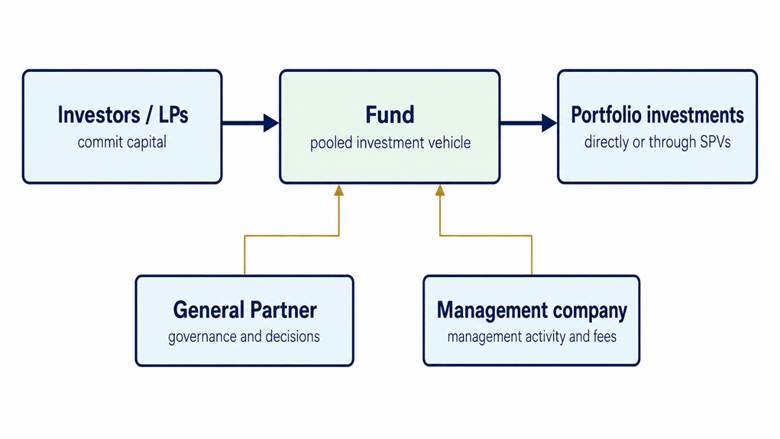
Figure 1. Simplified structure for orientation; actual legal and regulatory arrangements vary.
Private Equity Fund Accounting Across the Fund Lifecycle
The accounting workload changes as the fund matures. Continuity matters because decisions made during setup affect investor allocations, reporting and eventual wind-down years later.
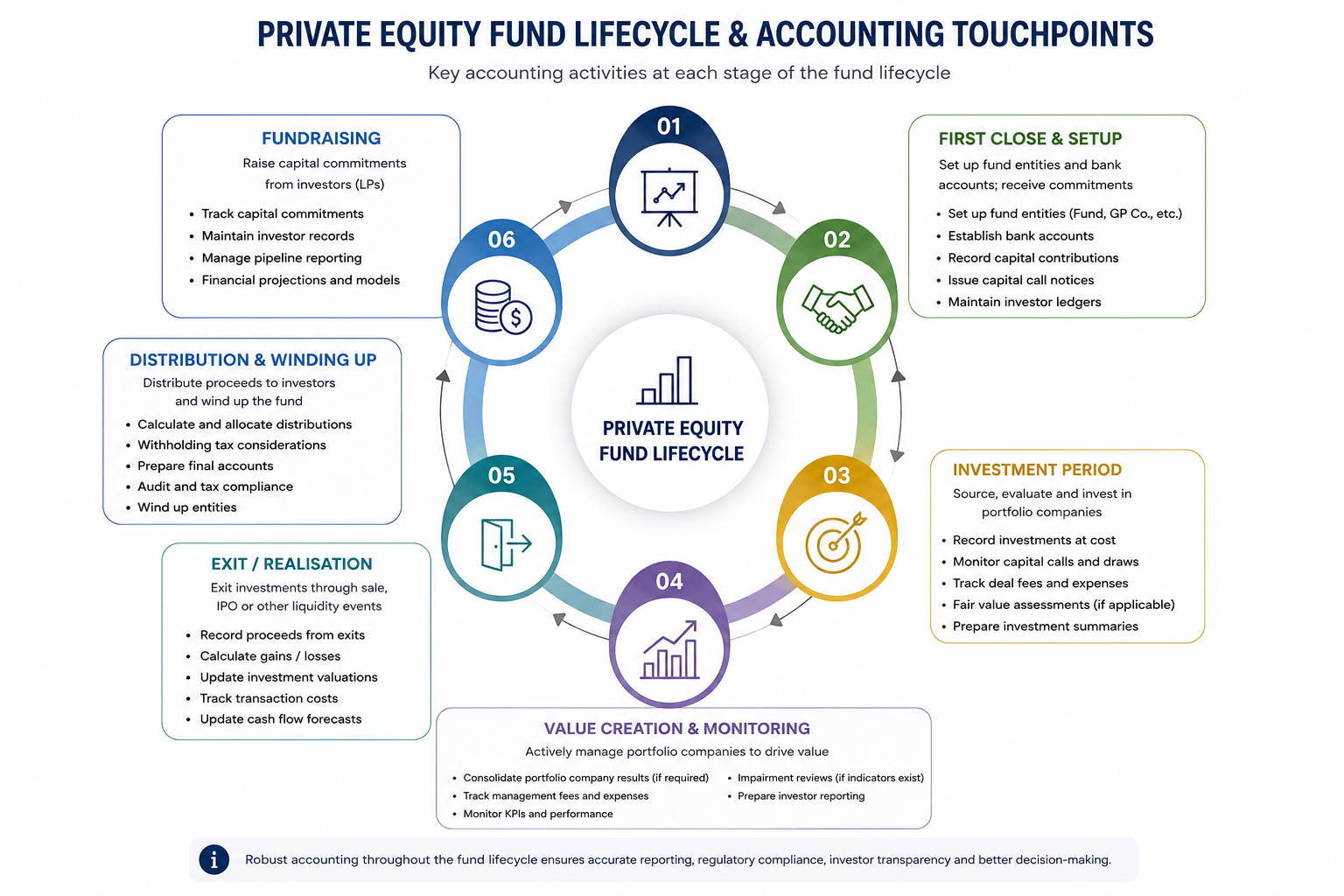
Figure 2. Lifecycle view with representative accounting touchpoints.
Formation and fundraising. The chart of accounts, entity records, investor master data and commitment schedules are established. Fund terms, fee provisions, allocation rules and reporting requirements need to be translated into repeatable processes.
Capital calls. Drawdowns are calculated and communicated, receivables are recorded where appropriate, cash receipts are matched, and investor commitments are updated. Late or unmatched receipts become visible exceptions.
Investment period. Acquisitions, transaction costs, follow-on funding and related cash movements are recorded in the correct entities. Ownership and investment-cost schedules must remain aligned with legal completion records.
Portfolio activity. The fund’s ledger captures fund-level income, expenses, investment-related cash flows and valuation movements. Portfolio-company operating activity is reflected only to the extent required by the applicable accounting and consolidation framework.
Realisations and distributions. Sale proceeds and realised results are recorded before distribution mechanics are applied. Investor allocations must follow the governing terms and agree with cash, notices and capital accounts.
Wind-down. Residual assets and liabilities are resolved, final allocations and reporting are completed, and records are retained in line with applicable requirements and policies.
Core Private Equity Fund Accounting Processes
A well-controlled process connects transaction evidence to both the ledger and the relevant subledgers. Capital calls and contributions update cash, investor receivables where used, commitments and capital accounts. Investment transactions update cost, ownership and cash records. Distributions reduce cash and are allocated between investors according to the governing terms and the nature of the proceeds.
Income, expenses and management fees require careful entity, period and investor attribution. Fee calculations may depend on commitments, invested capital, step-down provisions, offsets or other terms. Fund expenses may also be subject to allocation policies or contractual limits. Calculations should therefore be supported by controlled inputs, versioned models and documented review rather than isolated spreadsheets with unclear ownership.
Cash and investment reconciliations then test whether the records agree with bank information, custodian or administrator data, legal documents and portfolio schedules. Where operational administration and accounting interact, clear hand-offs with fund administration services help prevent notices, cash tracking and accounting entries from developing on separate timelines.
Valuation and NAV in Private Equity Fund Accounting
Valuation is a central input because private investments do not usually have continuously observable market prices. Under IFRS 13, where that standard applies, fair value is an exit-price measurement based on an orderly transaction between market participants at the measurement date. Other reporting frameworks may impose different presentation, measurement or disclosure requirements, so the applicable GAAP and fund policy must be confirmed.
The 2025 IPEV Valuation Guidelines describe current best-practice recommendations for private-capital investments reported at fair value. In operations, the important point is a controlled valuation file: approved source data, consistent methodology, documented assumptions, governance evidence and a traceable bridge from the prior period.
NAV brings together the resulting investment values with cash, receivables, liabilities, accruals and other balances. It may support investor statements, performance analysis and governance reporting, but its precise use and calculation frequency depend on the fund. A dedicated NAV resource should carry the detailed methodology; this guide focuses on its place in the wider accounting process.
Carried Interest and Waterfall Calculations
The distribution waterfall determines how proceeds are allocated between investors and carry participants. Carried interest is the share of profits or distributions allocated to the carry participants when the conditions in the fund documents are met. Waterfalls may operate on a whole-fund or deal-by-deal basis and can include return of capital, preferred return, catch-up and carried-interest tiers. Side letters, parallel vehicles, recycling and prior distributions can add further layers.
For accounting purposes, the calculation needs complete contribution and distribution of histories, consistent treatment of realised and unrealised amounts, and a clear link to the LPA. Models should be independently reviewed, changes should be explained between periods, and any accounting recognition should follow the applicable reporting framework. Legal interpretation, tax treatment, and accounting recognition should be confirmed by the appropriate specialists rather than inferred from a generic model.
Private Equity Fund Reporting
Private equity fund reporting serves several audiences. Financial statements present the fund under the applicable accounting framework. Capital account statements show investor-level movements and closing positions. Periodic investor reports may add portfolio commentary, performance measures and fee or expense information, while management reporting supports the GP’s oversight of liquidity, commitments, valuations, exceptions and delivery status.
Consistency across those outputs is essential. Capital-call notices and allocations should reconcile to the ledger, commitment schedule and investor capital accounts. Cash receipts should be matched separately to the amounts received, with unpaid, late or unmatched amounts identified and investigated. The same valuation should flow through the investment schedule, NAV and financial statements. The ILPA Reporting Template promotes greater uniformity in private-equity reporting of fees, expenses and carried interest; managers should still apply the reporting terms agreed with their investors.
A practical fund and investor reporting support model should establish a reporting calendar, named data owners, cut-off dates, validation checks and final approval responsibility. This turns reporting into a controlled sequence rather than a late-stage assembly exercise.
Controls and Reconciliations
Controls make the accounting process repeatable and reviewable. Core reconciliations should cover bank and cash balances, investment cost and ownership, capital calls and distributions, management fees and expenses, inter-entity and related-party positions, investor commitments and capital accounts. Each reconciliation needs a preparer, reviewer, reporting date, supporting evidence and a clear status for unresolved differences.
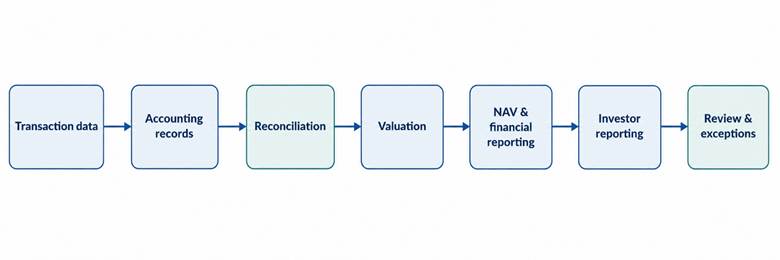
Figure 3. A controlled reporting flow; exceptions return to the relevant source before release.
Review controls should focus on material movements, unusual allocations, stale reconciling items, changes to models and consistency between reports. Exception management is equally important: issues need owners, due dates and evidence of resolution. That discipline supports year-end preparation and can make later audit requests easier to answer.
Where additional delivery is required around schedules, working papers and query tracking, targeted audit support can help maintain momentum while responsibility for the audit opinion and related judgements remains with the audit firm.
Common Private Equity Fund Accounting Challenges
Complexity tends to accumulate at the points where entities, data and deadlines meet. A single investment may involve the main fund, a parallel vehicle, a co-investment vehicle and several holding companies. If transaction documents, bank data, administrator records and portfolio information arrive at different times, the finance team must control cut-off and explain temporary differences without losing the overall timetable.
Valuation timing can create similar pressure. Updated portfolio inputs may arrive close to the reporting deadline, while fees, investor allocations and performance reporting depend on the resulting numbers. Weak master data or inconsistent investor identifiers then turn otherwise straightforward reconciliations into manual investigation. Coordination problems are often visible through repeated late adjustments, ageing exceptions, version confusion and reports that cannot be traced easily to approved support.
Simplified illustration: A manager operating a main fund, a parallel vehicle and a co-investment SPV receives revised quarter-end valuation inputs after draft investor statements have been prepared. A controlled process identifies every affected output, reruns the agreed allocations, records the review and prevents an earlier statement version from being released. This example is illustrative and does not describe a client engagement.
The practical response is to map dependencies before the close: which inputs arrive from whom, which calculations use them, which entities are affected and who approves the result. That map gives the team a basis for escalation when an input or decision is late.
In-House, Outsourced or Co-Sourced Private Equity Fund Accounting
The right model depends on structure, transaction volume, internal capability, oversight preferences and the predictability of demand. An in-house team offers direct organisational knowledge and day-to-day control, but may carry concentration risk or struggle with peak workloads. A fully outsourced model can provide broader recurring capacity, provided ownership, access, service levels and review responsibilities are explicit. Co-sourcing keeps selected responsibilities internally while adding external professionals for defined processes, entities or reporting periods.
Fund managers assessing these options should examine process ownership, system access, review evidence, continuity, data security, escalation and exit arrangements. The companion guide on fund accounting outsourcing provides a more detailed selection framework.
Decision point: Choose the model that gives finance leadership clear ownership and reliable delivery across ordinary periods and peaks. Additional capacity has most value when it works inside the existing ledger, timetable and control framework.
When Should a Private Equity Manager Consider Additional Accounting Support?
Additional support becomes relevant when the delivery model no longer matches the fund’s operating demands. Common signals include close timetables that depend on sustained overtime, reconciliations that remain open into reporting, repeated late adjustments, a new vehicle or strategy, administrator transition, an approaching audit, or a key-person absence. The underlying team may be capable; the issue is often capacity, specialist coverage or continuity at a particular point in the lifecycle.
Project Accountants provides execution-focused capability across fund accounting, financial reporting, fund administration support and related finance operations through outsourcing, co-sourcing, professional secondments and project-based support. Work can be structured around defined processes or reporting periods and delivered within the client’s systems, controls and approval framework.
A useful first conversation should identify the affected entities, current timetable, outstanding issues, systems, review boundaries and desired handover. Contact Project Accountants to discuss the priorities and whether targeted or recurring support is appropriate.
A Controlled Record Across the Life of the Fund
The most useful test of a private equity accounting model is whether a material figure can be followed from its source through the relevant entity, reconciliation, allocation, and report. When that route is clear, fund managers have a stronger basis for oversight, and finance teams can address exceptions without rebuilding the story each quarter.
As structures grow or deadlines tighten, managers should assess whether process design and capacity still match the work. Project Accountants can provide experienced delivery support within existing systems and controls. Visit projectaccountants.co.uk to learn more.
A Controlled Record Across the Life of the Fund
The most useful test of a private equity accounting model is whether a material figure can be followed from its source through the relevant entity, reconciliation, allocation and report. When that route is clear, fund managers have a stronger basis for oversight and finance teams can address exceptions without rebuilding the story each quarter.
As structures grow or deadlines tighten, managers should assess whether process design and capacity still match the work. Project Accountants can provide experienced delivery support within existing systems and controls. Visit projectaccountants.co.uk to learn more.
Frequently Asked Questions
What is fund accounting in private equity?
It is the process used to record, allocate, reconcile and report a private equity fund’s capital activity, investments, valuations, expenses and investor positions across the fund and related vehicles.
How does private equity fund accounting work?
It begins with source transactions and fund terms, records activity in the appropriate entity and investor records, reconciles balances, incorporates approved valuations and produces reviewed financial and investor reports.
How is private equity fund accounting different from traditional accounting?
It places greater emphasis on investor commitments and capital accounts, private investment valuations, multi-vehicle structures, allocation of mechanics and reporting under fund documents.
What does a private equity fund accountant do?
A fund accountant maintains ledgers and schedules, records capital and investment activity, prepares reconciliations, supports valuations and allocations, and produces financial, management and investor reporting for review.
How are capital calls and distributions recorded?
The treatment follows the fund documents and applicable accounting policy. Operationally, teams record and reconcile the notice, investor allocation, cash movement, commitment position and capital account impact.
What is the role of NAV in private equity fund accounting?
NAV combines the value of investments and other assets with liabilities and accruals at a reporting date. It supports oversight and investor reporting, subject to the fund’s framework, policy and reporting terms.
Can private equity fund accounting be outsourced?
Yes. It may be outsourced in full or supported through a co-sourced or project model. The manager should retain clear oversight of responsibilities, approvals, access, controls and provider performance.