

Fund accounting and fund administration are closely connected, but they are not the same.
Fund accounting focuses on the fund’s financial records and reporting, while fund administration supports its broader ongoing operations and investor activities.
The exact responsibilities vary by fund and service arrangement, so understanding the distinction is important when choosing a provider.
Why the Distinction Matters
The two terms are often used interchangeably because both functions draw on the same source data, contribute to the same reporting cycle and may be delivered by one provider. That overlap can obscure who prepares an output, who checks it, who approves it and who remains accountable when a deadline or exception arises.
A clear distinction matters when setting team responsibilities, assessing capacity, defining a provider scope or reviewing service levels. It also makes escalation more effective: a delayed investor notice, an unreconciled cash balance and an unresolved valuation input may affect the same reporting cycle, but they require different expertise and ownership.
Fund Accounting vs Fund Administration at a Glance
Fund accounting is the financial-recording and reporting function. It maintains books and supporting reconciliations, records transactions, supports valuation and NAV processes, and prepares financial or investor reporting outputs. A fuller explanation of what fund accounting involves belongs in the dedicated definition guide.
Fund administration is the wider coordination and servicing function around a fund. Depending on mandate, it may cover investor onboarding and records, capital calls and distributions, cash tracking, operational registers, reporting coordination and fund accounting. Some mandates are broad; others divide these activities among the manager, an accounting team, an administrator and specialist providers.
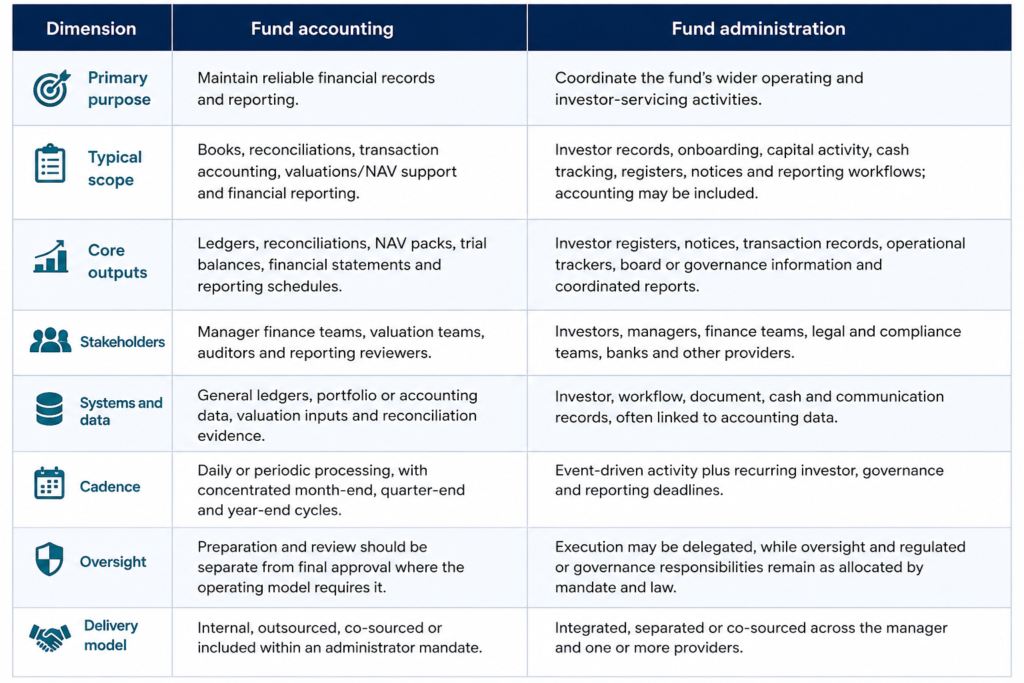
Table 1. Typical distinctions. Actual allocation should be confirmed in the governing documents, responsibility matrix and service agreement.
How Fund Accounting and Fund Administration Differ
Focus and outputs
Fund accounting is organised around financial accuracy, completeness and reporting. The work converts transactions, cash movements, positions and valuation inputs into controlled books and reporting outputs. Its central questions concern whether activity has been recorded correctly, balances reconcile, valuation inputs have been applied consistently and reports can be supported by evidence.
Fund administration has a broader operational focus. It coordinates events and records across the fund, its investors and its service providers. Outputs often include investor notices, ownership records, capital-activity trackers, operational registers and reporting packs. These outputs depend on accounting data, but the administration task also includes communication, workflow management and record maintenance.
Responsibility and approval
The distinction becomes most important at control points. Preparing a NAV calculation is different from reviewing the underlying reconciliations, challenging valuation inputs and approving release. Likewise, preparing a capital-call notice is different from approving the amount, authorising the communication and overseeing compliance with governing documents.
Contracts and procedures should separate preparation, review, approval and oversight. Delegating or outsourcing an activity does not remove any responsibility or oversight obligation that applicable law, regulation or the fund’s governing documents retain with the manager or governing body. The precise allocation depends on the fund structure, jurisdiction and mandate. The allocation must reflect the relevant structure, jurisdiction, documents and service agreement.
Stakeholders and skills
Fund accounting relies heavily on technical accounting, reconciliation, valuation support and financial-reporting capability. Fund administration combines operational control, investor servicing, data management and coordination across a broader provider network. In practice, strong delivery requires both functions to understand the other: accounting needs timely operational data, while administration needs dependable financial outputs.
Job titles do not always map neatly to these functions. A fund accountant may sit inside an administrator, a manager or a specialist accounting team. A fund administrator may perform accounting tasks under one mandate and focus mainly on investor and operational work under another. Compare the work and its ownership rather than relying on titles.
Where Do the Two Functions Overlap?
Overlap is normal because a single transaction creates financial, investor and operational consequences. NAV processes depend on reconciled books and valuation inputs, but they also require data collection, exception management, review and release. Capital calls and distributions require investor allocations and notices, cash tracking, ledger entries and updated investor records.
Other shared areas include investor reporting, period-end reporting, audit evidence, data controls and onboarding-related records. Operational compliance support may sit alongside these workflows without becoming part of fund accounting. The deciding evidence is the agreed responsibility matrix: it should identify the owner of each input, control, output and approval.
Comparison summary: shared data does not mean shared accountability. The operating model should assign each hand-off explicitly.
How They Work Together in Practice
The following workflows are representative. They illustrate common hand-offs, not a universal allocation or a specific Project Accountants engagement.
Capital call or distribution
The manager or authorised decision-maker establishes the transaction inputs and timing. Calculations may then be prepared by the accounting team or administrator, while the administrator validates investor records and prepares notices. A designated reviewer checks the allocations, governing-document requirements, notice terms and release conditions before approval. For distributions, the review may also include available cash and any applicable liquidity restrictions.
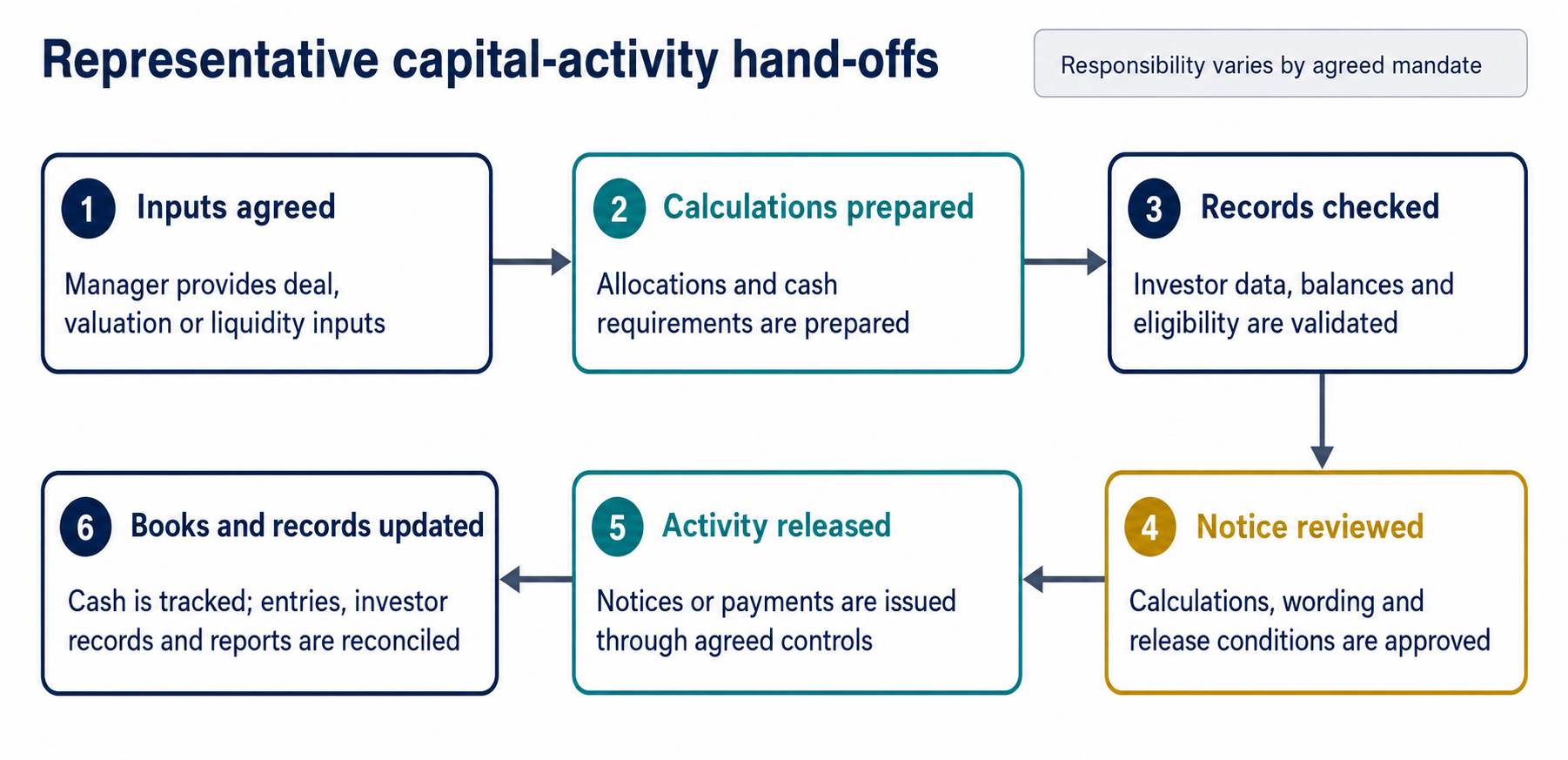
Figure 1. A representative hand-off sequence. The named owner of each step depends on the agreed mandate and control framework.
After release, cash receipts or payments are tracked and exceptions are escalated. Accounting records the entries and reconciles cash; administration updates investor records and reporting trackers. A final control confirms that the financial and investor records agree. For closed-ended structures, the calculation and allocation detail may require the specialist treatment covered in the guide to private equity fund accounting.
Quarter-end or NAV cycle
At period end, administration gathers source data and follows up missing inputs while accounting updates the ledger, completes reconciliations and records any valuation adjustments required under the applicable accounting policies and reporting framework.
Exceptions move back to the relevant owner for resolution. The accounting pack then supports NAV review, investor reporting and governance reporting, with approval given by the party specified in the governing documents and operating procedures.
The same evidence set may also support audit support and reporting readiness. A controlled close therefore needs clear cut-off times, version control, review evidence and escalation routes. A hand-off is complete only when the receiving team has usable data and can identify unresolved items.
Who Owns What?
A responsibility matrix should be specific enough to operate under deadline pressure. The example below uses four practical categories: Responsible for performing the work; Reviews/Approves the output; Provides Input; and Informed. It should be adapted to the fund and should name roles rather than relying only on provider labels.
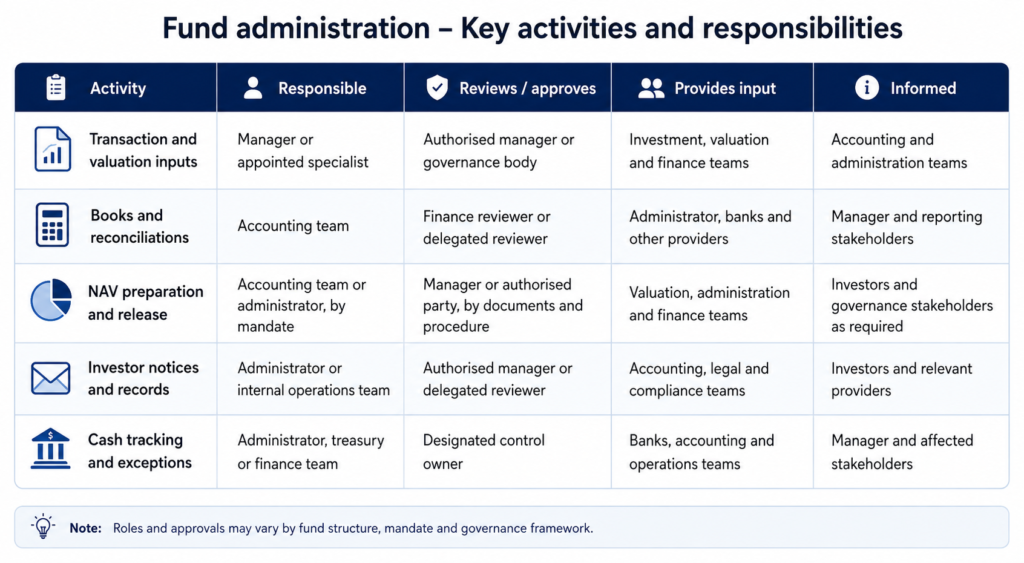
Table 2. Illustrative allocation only.Outsourcing execution does not remove any oversight or regulatory responsibility that applicable law, regulation or the governing documents retain with the manager or governing body.
Can the Same Team or Provider Perform Both?
Integrated model
One provider or team performs both functions. This can reduce duplicate data handling, simplify coordination and create continuity across reporting cycles. The scope still needs clear review, approval and escalation points, particularly where the same team prepares linked accounting and investor outputs.
Separated model
Accounting and administration are assigned to different teams or providers. Separation may add specialist depth or an additional control perspective, but it creates more interfaces. Data definitions, file formats, cut-off times and exception ownership must be agreed to prevent reconciliation delays or duplicated work.
Co-sourced model
Internal staff retain selected ownership while external teams provide recurring capability, specialist input or peak-period capacity. A co-sourced model can combine internal knowledge with fund accounting and reporting support and broader fund administration support. It depends on shared systems access, documented controls, dependable hand-offs and a clear escalation route.
No model is inherently superior. The relevant comparison is whether it provides sufficient capability, resilience and independence while keeping ownership visible. A broad provider label cannot compensate for gaps in outputs, controls or accountability.
Which Support Does a Fund Need?
Start with the operational gap rather than the service label. The answers below help define whether the requirement is accounting-led, administration-led or shared.
| Decision question | What the answer may indicate |
|---|---|
| Are the main pressure points books, reconciliations, NAV or financial reports? | A primarily fund-accounting requirement. |
| Are onboarding, notices, capital activity, investor records or operating coordination under pressure? | A primarily administration requirement. |
| Are duties unclear between the manager, accountant and administrator? | A responsibility and control-design gap before additional capacity is selected. |
| Is the need specialist capability, recurring capacity, peak-period support or process design? | The delivery model and duration should be defined separately from the function. |
| Does the proposed scope define outputs, reviews, service levels, data access and escalation? | If not, the label alone is unlikely to produce reliable accountability. |
Key Takeaways
Fund accounting is the narrower financial-recording and reporting function; fund administration is usually the broader operational and investor-servicing function. Their work overlaps wherever the same event affects books, cash, investor records and reporting. The practical answer is therefore found in the mandate, not the label. Define the required outputs, input owners, preparation and review steps, final approvals, service levels and escalation routes before choosing a team or provider.
Frequently Asked Questions
Is fund accounting part of fund administration?
What is the difference between a fund accountant and a fund administrator?
Can the same provider perform both functions?
Who is responsible for calculating and approving NAV?
Can accounting and administration be outsourced separately?
Which function handles investor reporting and capital calls?